The following are the goals we need to accomplish BEFORE March
21st.
1. Submit Permission Slip (w/
$50.00) by Next Week
2. Study Roles of Procedues (see delegate handbook
and attached)
3. Research Other Topics in the Agenda (see
delegate handbook and attached)
4. Speech Training
MANDATORY MEETING:
March 11th - 6:00pm High School Library
HIGHLY Recommended Meetings:
Every Wednesday morning and Friday PH (in Room 238)
The conference is
only 3-weeks away!! Keep your schedule as clear as possible. When unable to
attend meetings, study the handbook on your own.
Remember, this is a
unique and interesting opportunity. One that will look GREAT on your
transcript. Also, it is an opportunity to have some FUN in
Milwaukee.
See you Wednesday morning!! Read your handbook over the
weekend.
Sunday, February 26, 2012

Tuesday, February 21, 2012
Q&A from the organizers
Good news! Please read on...
Q 1. Is there a standard format for the position papers?
A: There is a general guideline for the position papers in the WHSMUN Handbook. It shows a sample of a position paper that you can use as a guideline. In general positon papers should provide the essential details of a country’s position on a given issue. Papers should be written in a narrative format (full sentences please!) and should be between three and four paragraphs in length. When writing position papers, it is not necessary to include general background information on your topic, as this is covered in the background guides provided to each delegation.
Q 2. For each committee(1,2, and 3), are all the topics discussed in each committee and should we make 15 positions paper in total?
A: Great question, all of the topics may be discussed but that will be determined by the delegates when they meet in the committees and vote on which topics to discuss and in what order so there is no guarantee that they will be discussing all 5 or for how long they will be discussing all 5. The chairs of the committees work very hard to make sure that all 5 are discussed while still maintaining the integrity of the process of the will of the committee in their voting on these measures. With that in mind, your delegation has been assigned the issues for each of the main committees that they are responsible for writing their position papers on, I have listed them below and they are also in the letter that I have attached for you. One student should be assigned to each issue and write their position paper on that issue, which means that you will have 2 students total in each committee with each of those students having written one paper on one of the issues that has been assigned. However, because they will be representing Turkey in general in the main committees they should at least read the other background guides so they have some familiarity with the other issues that will be discussed, but they do not have to write papers on them. Does that make sense? Typically what I have advised my students to do in the past for this type of scenario is print out the background guides for the issues that they didn't right a position paper on and make a few notes about what their country's general foreign policy positions may be for that issue.
In other words, we only have to make 6 position papers of the topics that surely will be discussed. While we must know about the topics in case we have time to discuss them. In each committee, we will appoint 2 delegates to take care of it.
Q 3. For each committee from the General Assembly, is our delegation divided into 2 people per committee or more?
A: Yes, as described above you have 2 people per committee and each one will have written a position paper on one of the two issues that have been assigned to you for that committee.
Topics that surely will be discussed and position papers must be made respectively:
Q 1. Is there a standard format for the position papers?
A: There is a general guideline for the position papers in the WHSMUN Handbook. It shows a sample of a position paper that you can use as a guideline. In general positon papers should provide the essential details of a country’s position on a given issue. Papers should be written in a narrative format (full sentences please!) and should be between three and four paragraphs in length. When writing position papers, it is not necessary to include general background information on your topic, as this is covered in the background guides provided to each delegation.
Delegates should take particular care to clearly and accurately reflect their country’s position. Additionally, spelling and grammar count, so please be sure to proofread. Finally, position papers will not be accepted unless they have been typed and are in the proper format.
Q 2. For each committee(1,2, and 3), are all the topics discussed in each committee and should we make 15 positions paper in total?
A: Great question, all of the topics may be discussed but that will be determined by the delegates when they meet in the committees and vote on which topics to discuss and in what order so there is no guarantee that they will be discussing all 5 or for how long they will be discussing all 5. The chairs of the committees work very hard to make sure that all 5 are discussed while still maintaining the integrity of the process of the will of the committee in their voting on these measures. With that in mind, your delegation has been assigned the issues for each of the main committees that they are responsible for writing their position papers on, I have listed them below and they are also in the letter that I have attached for you. One student should be assigned to each issue and write their position paper on that issue, which means that you will have 2 students total in each committee with each of those students having written one paper on one of the issues that has been assigned. However, because they will be representing Turkey in general in the main committees they should at least read the other background guides so they have some familiarity with the other issues that will be discussed, but they do not have to write papers on them. Does that make sense? Typically what I have advised my students to do in the past for this type of scenario is print out the background guides for the issues that they didn't right a position paper on and make a few notes about what their country's general foreign policy positions may be for that issue.
In other words, we only have to make 6 position papers of the topics that surely will be discussed. While we must know about the topics in case we have time to discuss them. In each committee, we will appoint 2 delegates to take care of it.
Q 3. For each committee from the General Assembly, is our delegation divided into 2 people per committee or more?
A: Yes, as described above you have 2 people per committee and each one will have written a position paper on one of the two issues that have been assigned to you for that committee.
Topics that surely will be discussed and position papers must be made respectively:
First Main Committee: Disarmament and International Security
1.Establishment of a Nuclear-Weapon-Free Zone in the Region of the Middle East
2. Prevention of Small Arms and Light Weapons Trafficking
Second Main Committee: Economic and Financial
3.Improving Fairness on the International Market to Facilitate Growth
4.The International Debt Crisis
Third Main Committee: Social, Humanitarian, and Cultural
5.Humanitarian Crisis in Darfur and Sudan and the Violation of International Law
6. Displacement of Refugees
Meeting on Wednesday Morning and Friday Power-hour
Wednesday afternoon worktime might be held this week at the Menomonie Public Library. Please bring your docs and laptop.
Friday, February 17, 2012
Republic of Turkey
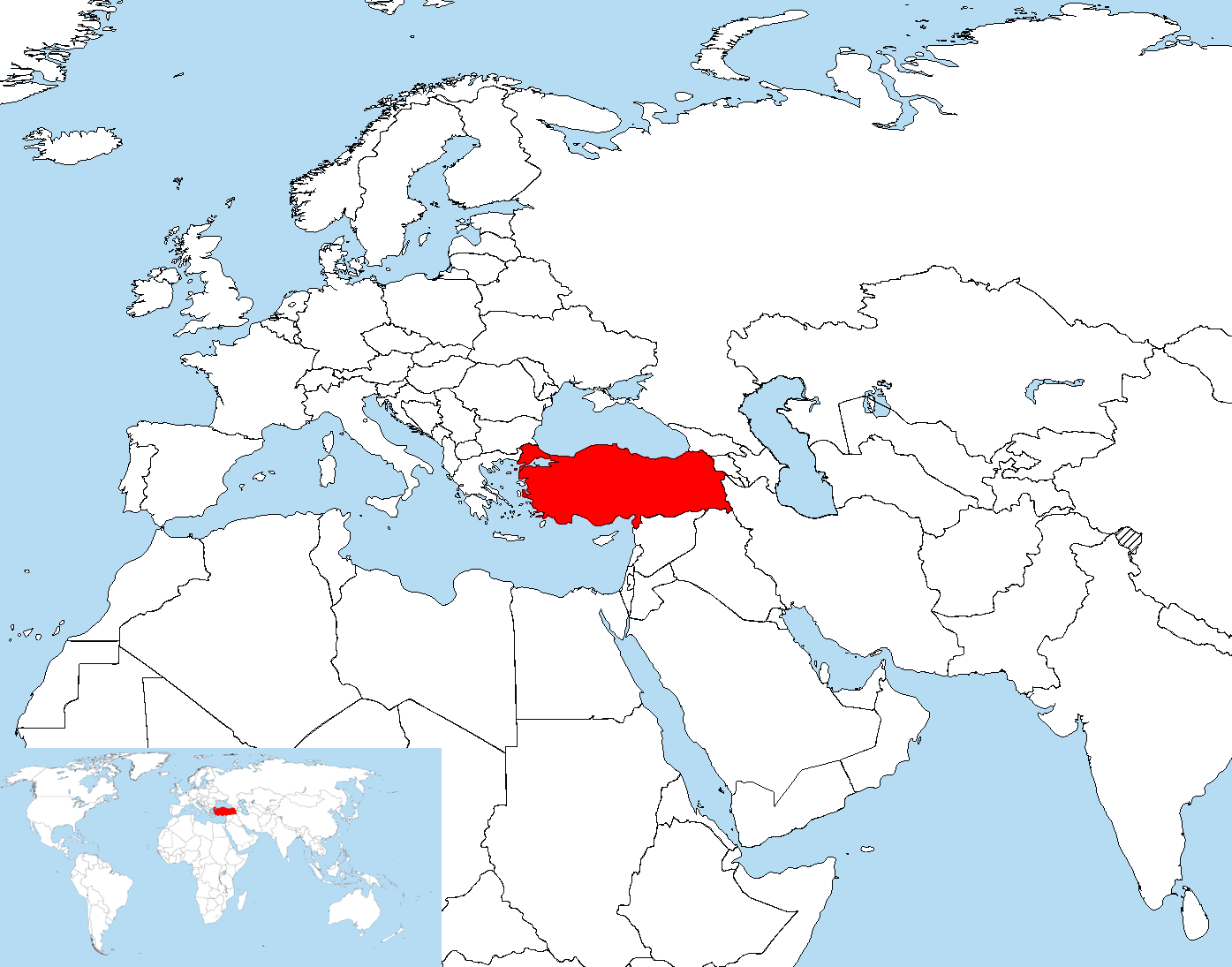 The Republic of Turkey is situated near the middle east and Europe. Bordering 8 countries: Bulgaria, Greece, Georgia, Iran, Armenia, Azerbaijan, Iraq, and Syria. Turkey is also bordered by several important seas: Black sea to the north, Agean sea to the west and Mediteranean sea to the south. It controls the important Turkish strait that supplies Russia and other Black sea bordering countries. The strait is controlled by the Turkish gov (Montreux Convention Since 1936). United Nations Convention on the Law of the Sea (UNCLOS), which entered into force in November 1994, has prompted calls for the Montreux Convention to be revised and adapted to make it compatible with UNCLOS's regime governing straits used for international navigation. However, Turkey's long-standing refusal to sign UNCLOS has meant that Montreux remains in force without further amendments. This strait has been a discussion since the Cold War and even during the Ottoman Empire. http://en.wikipedia.org/wiki/Montreux_Convention_Regarding_the_Regime_of_the_Turkish_Straits
This is the Republic of Turkey's official flag. The symbol is a symbol is the Islamic faith. Representing the large Islam faith that Turkey is based on since old times
-Official Language:Turkish.
-Largest city: Istanbul
-The Population of Turkey is 74.7million (18th in the world).
-Government of Turkey is democratic Parliamentary republic.
-President: Abdullah Gul
-Declaration of Independence: Oct 29, 1923
-Nominal GDP 2010: 15th in the World (Similar to Canada, Iran, Taiwan, Indonesia, Australia)
-Per Capita GDP: $14,106 (Around 60th Similar to Latvia and Romania and Mexico )
-Human Development Index: 0.699 (92nd, At a scale of 1.0)
-75 % Population live in Urban cities
-76% Turks, 15% Kurds, 8% Other (Arabs, Greeks, Jews...)
-96% Islamic Religion
International Influence
Founding member of UN, OECD, G-20, OIC, OSCE, ECO,
Turkey is currently elected non-permanent member of the Security Council in UN.
Turkey does not recognize Republic of Cyprus (Member of the EU) and is the only country that recognizes The Turkish Republic of Northern Cyprus (est 1983, main conflict with Greece and the EU).
Ties with EU is intensive and is applying for full membership. Center of Foreign Policy attention.
Strong ties with the U.S., Joined NATO 1952.
Economy
1983 transformed into a Market economy through reforms. With increased foreign loans and gov corruption, Turkey experienced inflation and recession during 90's to 2001. After financial reforms in 2001, Turkey has gotten much better with lower unemployment rates, less inflatation, and more foreign investments.
Tourism, manufacturing, banking, automobile, ship construction, minerals, electronics plays large part in the economy.
Turkey has a Free-trade-agreement with the EU.
Links to various Websites
1. Financial Markets and Globalization in Turkey (PDF University of Istanbul)
http://www.luc.edu/orgs/meea/volume1/arin.pdf
2. National Intelligence Organization (MIT-turkey secret police)
http://www.globalsecurity.org/intell/world/turkey/mit.htm
3. Turkey Accession to the EU (Wiki)
http://en.wikipedia.org/wiki/Accession_of_Turkey_to_the_European_Union
4. Turkey, China set eyes on $100 bln in mutual trade
http://www.todayszaman.com/news-272194-turkey-china-set-eyes-on-100-bln-in-mutual-trade.html
5. Debt of developing countries
http://en.wikipedia.org/wiki/Debt_of_developing_countries


Sunday, February 12, 2012
Position Paper
WHSMUN 2012 Position Paper Work Division
1st Main Committee (Disarmament and International Security )
Melati & Larissa
1.Prevention of Small Arms and Light Weapons Trafficking-Melati
2.Establishment of a Nuclear-Weapon-Free Zone in the Region of the Middle East-Larissa
-------------------
3.Piracy in Somalia and its Effect on Regional Security
4.Outer Space Arms Race
5.Cyber Warfare
2nd Main Committee (Economic and Financial Committee)
Caleb & Halley G
1.Improving Fairness on the International Maket to Facilitate Growth-Caleb
2.The International Debt Crisis
---------------------
3.Promoting the Proliferation of Green Technologies
4.Improving the International Monetary Fund-Caleb
5.Micro Financing and the Developing World
3rd Main Committee (Social, Humanitarian, and Cultural)
Arielle & Maral
1.Humanitarian Crisis in Darfur and Sudan and the Violation of International Law-Arielle
2.Displacement of Refugees-Maral
---------------------
3.Protection of Human Rights in a Warzone-Maral
4.Rights to Clean Drinking Water
5.Ethnic tensions in China-Hailey B.
Please do not be late on turning in these papers, as we will discuss and revise them as a group. Make it your priority! :)
If you have any questions regarding how to write the position paper, you can search online for examples(recommended), or ask me.
Thank you and have fun writing these papers!
Useful links to get started!
http://www.unausa.org/munpreparation/positionpapers
Delegate handbook also has background info on the topic!
http://www4.uwm.edu/cie/documents/WHSMUN_Handbook_2012_Final.pdf
1st Main Committee (Disarmament and International Security )
Melati & Larissa
1.Prevention of Small Arms and Light Weapons Trafficking-Melati
2.Establishment of a Nuclear-Weapon-Free Zone in the Region of the Middle East-Larissa
-------------------
3.Piracy in Somalia and its Effect on Regional Security
4.Outer Space Arms Race
5.Cyber Warfare
2nd Main Committee (Economic and Financial Committee)
Caleb & Halley G
1.Improving Fairness on the International Maket to Facilitate Growth-Caleb
2.The International Debt Crisis
---------------------
3.Promoting the Proliferation of Green Technologies
4.Improving the International Monetary Fund-Caleb
5.Micro Financing and the Developing World
3rd Main Committee (Social, Humanitarian, and Cultural)
Arielle & Maral
1.Humanitarian Crisis in Darfur and Sudan and the Violation of International Law-Arielle
2.Displacement of Refugees-Maral
---------------------
3.Protection of Human Rights in a Warzone-Maral
4.Rights to Clean Drinking Water
5.Ethnic tensions in China-Hailey B.
Please do not be late on turning in these papers, as we will discuss and revise them as a group. Make it your priority! :)
If you have any questions regarding how to write the position paper, you can search online for examples(recommended), or ask me.
Thank you and have fun writing these papers!
Useful links to get started!
http://www.unausa.org/munpreparation/positionpapers
Delegate handbook also has background info on the topic!
http://www4.uwm.edu/cie/documents/WHSMUN_Handbook_2012_Final.pdf
Wednesday, February 1, 2012
5 Tips for new delegates
I talked to Mrs. Ruegnitz today about our morning meetings which is possibly coming up next week. She said that we could meet in the Social Studies Workroom (The room we had the meeting last time). So, we'll be having our MUN training in that workroom from now on until further notice.
I also found some great tips online at bestdelegate.com
There are 5 tips a delegate (you) should know when facing model UN.
1. Prepare a research binder.
2. Frame your topics and speeches.
3. Write out your first speech.
4. Focus on one idea at a time.
5. Learn the different stages of committee.
YOU MUST!!! Please read the article for detail reasoning on each at bestdelegate.com
http://bestdelegate.com/how-to-face-your-fear-in-mun-5-tips-for-new-delegates/
I also found some great tips online at bestdelegate.com
There are 5 tips a delegate (you) should know when facing model UN.
1. Prepare a research binder.
2. Frame your topics and speeches.
3. Write out your first speech.
4. Focus on one idea at a time.
5. Learn the different stages of committee.
YOU MUST!!! Please read the article for detail reasoning on each at bestdelegate.com
http://bestdelegate.com/how-to-face-your-fear-in-mun-5-tips-for-new-delegates/
Monday, January 30, 2012
Meeting Agenda for 1/27/2012
Explaining 10 mins
(1)-Know the UN system. (6)-Review the rules and procedures for your conference. These
rules are intended to create a level playing field allowing each country to
accomplish its individual goals in speaking about their policies while
maximizing opportunities for the group to reach agreement or even consensus on
the issue. Each conference publishes a set of rules and procedures that are
derived from those used by the UN. There are many resources on protocol and
parliamentary procedure available through MUN sites and books.
8.
Tips for MUNer’s
1.
Start of Semester 2
2.
We have 7.5 weeks until the March 22-23 Conference in Milwaukee, WI.
3.
Morning meetings around 7:15 to
7:35 in the library for training.
4.
Read through the WHSMUN
Delegate Handbook, Vocabulary for MUN, and research on the internet about MUN → Self Driven
5.
Research on Turkey (Read the news, Wikipedia,
CIA World fact book…)
6.
Position Paper are due on March 2 ( in 5 weeks)
Explaining 15 mins
7.
Gathering information (via
http://cyberschoolbus.un.org/modelun/prep.html):
(2)-Become familiar with the your country's history, culture, political
structure, and current political affairs. In addition to resources you may find
at your school, university, or public library and on the internet, it may be
useful to read fiction and non-fiction books (e.g., biographies) written by
authors who live in your country. They may offer insights into the culture you
are learning about.
(3)-Learn about your country's viewpoints on as many of the issues
that will be discussed at the conference you will be attending as you can.
(4)-Know your allies and your opposition. In order to adequately represent
your country during the conference, you will need to interact with delegates
from other countries. Knowing their positions on your topic will help you
predict their arguments during debate. This will be very useful in helping you
decide in advance where it might be useful to seek cooperation or compromise.
(5)-Be familiar with current statistical data on your topic and country.
- Remember it is not your opinion you are expounding but the country
you are representing.
- Be willing to continuously improve and refine you capabilities.
- Do mock trials with team members.
- Technique matters - so practice it.
- Be aware of different political perspectives - East vs. West and North
vs. South.
- Compromise is an art, treat it that way.
- Get hooked on MUN, this will change your life.
- Learn from your experience.
- Hold a debriefing session after each conference to discuss things
that worked and things that did not work.
- Keep a record of your feedback and plans for improvement.
- Congratulate your team members (and other players!) on their
contributions to the team and the conference.
Meeting One: Orientation supplement
Q:
What is Model United Nations?
A: Model UN promotes students' and teachers' interest in world around them and broadens a student's knowledge in a variety of subjects. Model UN also teaches vital skills in negotiation, public speaking, problem solving, conflict resolution, research and communication. Model UN also gives students and teachers the opportunity to meet interesting new people and make new friends.
Q: What are some of the educational benefits of Model UN?
A: For almost 60 years, teachers and students have benefited from and enjoyed this interactive learning experience. It not only involves young people in the study and discussion of global issues, but also encourages the development of skills useful throughout their lives, such as negresearch, writing, public speaking, problem solving, consensus building, conflict resolution and compromise and cooperation.
Q: What types of topics are discussed in Model UN conferences?
A: The agenda items discussed in committee vary at each conference. Most conferences tend to focus on current affairs issues that are being discussed in the United Nations. These issues can highlight political, financial and/or social concerns. However, the task of some committees might be to address hypothetical concerns or issues from the past or future. For example, many conferences have "crisis" committees, in which delegates must react to a hypothetical or actual crisis situation. Other conferences host historical or future Security Council simulations.
(Go to these sites for more information!!!)
Good
Luck, people! Hope to see you again!
A:
Model United Nations is a simulation of the United Nations. In Model UN,
students step into the shoes of ambassadors from UN member states to debate
current issues on the organization's agenda. While playing their roles as
ambassadors, student "delegates" make speeches, prepare draft
resolutions, negotiate with allies and adversaries, resolve conflicts, and
navigate the Model UN conference rules of procedure - all in the interest of
mobilizing "international cooperation" to resolve problems that
affect countries all over the world.
Before playing out
their ambassadorial roles in a Model UN simulation, students research the issue
that their committee will address. Model UN participants learn how the
international community acts on its concerns about topics including peace and
security, human rights, the environment, food and hunger, economic development
and globalization. Model UN delegates also look closely at the needs, goals and
foreign policies of the countries they will represent at the event. The insights
they gain from their exploration of history, geography, culture, economics and
science contribute to the authenticity of the simulation when the role playing
gets under way. The delegates' in-depth knowledge of their countries guarantees
a lively and memorable experience.
Q: Why should I participate in Model UN?A: Model UN promotes students' and teachers' interest in world around them and broadens a student's knowledge in a variety of subjects. Model UN also teaches vital skills in negotiation, public speaking, problem solving, conflict resolution, research and communication. Model UN also gives students and teachers the opportunity to meet interesting new people and make new friends.
Q: What are some of the educational benefits of Model UN?
A: For almost 60 years, teachers and students have benefited from and enjoyed this interactive learning experience. It not only involves young people in the study and discussion of global issues, but also encourages the development of skills useful throughout their lives, such as negresearch, writing, public speaking, problem solving, consensus building, conflict resolution and compromise and cooperation.
Q: What types of topics are discussed in Model UN conferences?
A: The agenda items discussed in committee vary at each conference. Most conferences tend to focus on current affairs issues that are being discussed in the United Nations. These issues can highlight political, financial and/or social concerns. However, the task of some committees might be to address hypothetical concerns or issues from the past or future. For example, many conferences have "crisis" committees, in which delegates must react to a hypothetical or actual crisis situation. Other conferences host historical or future Security Council simulations.
(Go to these sites for more information!!!)
Subscribe to:
Posts (Atom)